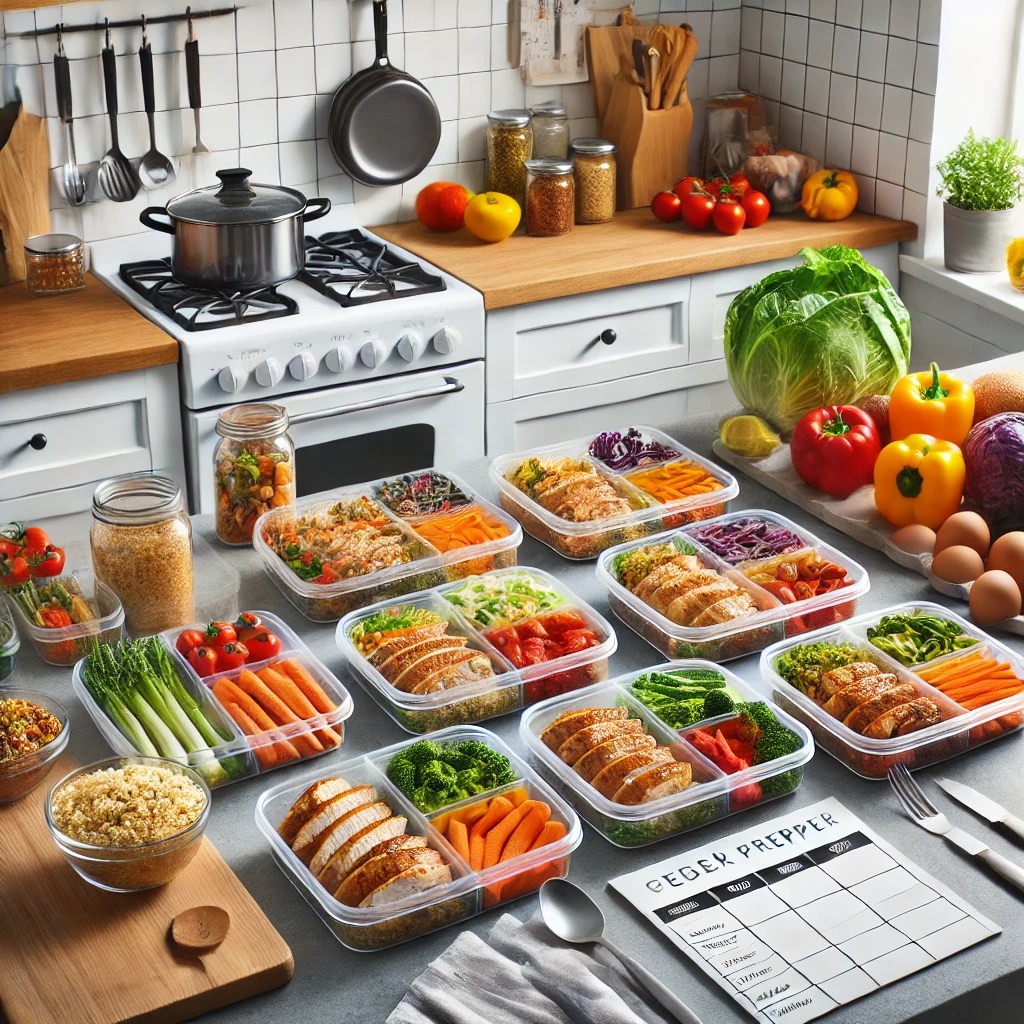
Meal prepping can be a game changer when it comes to saving time, reducing stress, and eating healthier in the new year. Here’s a guide for beginners looking to get started with meal prepping:
1. Plan Your Meals
- Choose Simple Recipes: Start with recipes that are easy to prepare and reheat. Think about dishes like salads, stir-fries, grain bowls, or casseroles.
- Focus on Balanced Meals: Aim to include lean proteins, healthy fats, and plenty of vegetables in your meals. For example:
- Protein: Chicken, tofu, turkey, beans, eggs
- Grains: Brown rice, quinoa, whole wheat pasta
- Vegetables: Broccoli, spinach, carrots, peppers
- Make a Weekly Menu: Write down meals for each day, and ensure they are versatile (e.g., leftovers can be used for lunches or snacks).
2. Create a Shopping List
- Organize by Categories: Create a shopping list based on what you need for each recipe. Break it down into sections such as produce, dairy, pantry items, etc.
- Stock Up on Staples: Make sure you have things like olive oil, spices, and condiments in your pantry to keep meals flavorful and interesting.
3. Prep Your Ingredients
- Wash and Chop Veggies: Cut up vegetables ahead of time, and store them in airtight containers.
- Batch Cook Grains: Cook a big batch of rice, quinoa, or pasta that can be used throughout the week.
- Prep Protein: Cook your protein for the week (e.g., grilling chicken, baking salmon, or cooking a big pot of beans).
- Prepare Snacks: Chop fruits and veggies for snacks, portion out nuts, or even prepare protein bars or energy bites.
4. Cook in Bulk
- Cook Once, Eat Multiple Times: Prepare larger quantities of meals and split them into individual portions for the week. Use containers that are easy to grab for lunches or dinners.
- Avoid Overcomplicating: Stick to simple techniques, like roasting a tray of vegetables or making a large stew or soup. These are easy to reheat and store.
5. Use the Right Containers
- Invest in Quality Containers: Get a set of reusable containers that are microwave-safe, leak-proof, and stackable. Glass containers are a good option as they are durable and don’t retain odors.
- Portion Control: Use containers that are appropriately sized for each meal to avoid overeating. A standard portion of protein is about 3-4 oz, and veggies should fill about half the container.
6. Store Your Prepped Meals
- Label Containers: Use labels or masking tape to mark the date on your containers, so you know when to eat them by. Most meals last 3-5 days in the fridge.
- Freezing for Longer Storage: If you want to prep for more than a few days, freeze some meals. Soups, stews, and casseroles freeze well. Ensure they are properly wrapped to prevent freezer burn.
7. Stay Consistent and Adjust
- Start Small: Don’t overwhelm yourself by prepping for the entire week at once. Start by prepping just a few meals and build up from there.
- Evaluate: After a week, reflect on what worked and what didn’t. Adjust your portion sizes or meal types based on what you enjoyed most.
8. Make It Fun
- Experiment with New Recipes: Try new spices, sauces, or cooking methods to keep meals interesting.
- Mix Things Up: You don’t have to eat the same meal every day. Cook in bulk and vary the seasonings or sauces to change the flavor profile.
Sample Beginner Meal Plan for a Week:
- Breakfast: Overnight oats with fruit and nuts
- Lunch: Grilled chicken with quinoa and roasted veggies
- Dinner: Stir-fry with tofu, rice, and mixed veggies
- Snacks: Hummus with carrot sticks, Greek yogurt with granola
By taking small steps and planning ahead, you’ll set yourself up for success this year. Happy meal prepping!
 KW CrossFit
Leave a comment