For years, the go-to advice for fat loss has been simple: eat less food and do more cardio. While this sounds logical on the surface, it is one of the biggest reasons people feel stuck, frustrated, and burned out in their fitness journey.
Yes, calories matter. Yes, movement matters. But the way you approach both makes all the difference.
Let’s break down why eating less and endlessly doing cardio often backfires, and what works better long term.
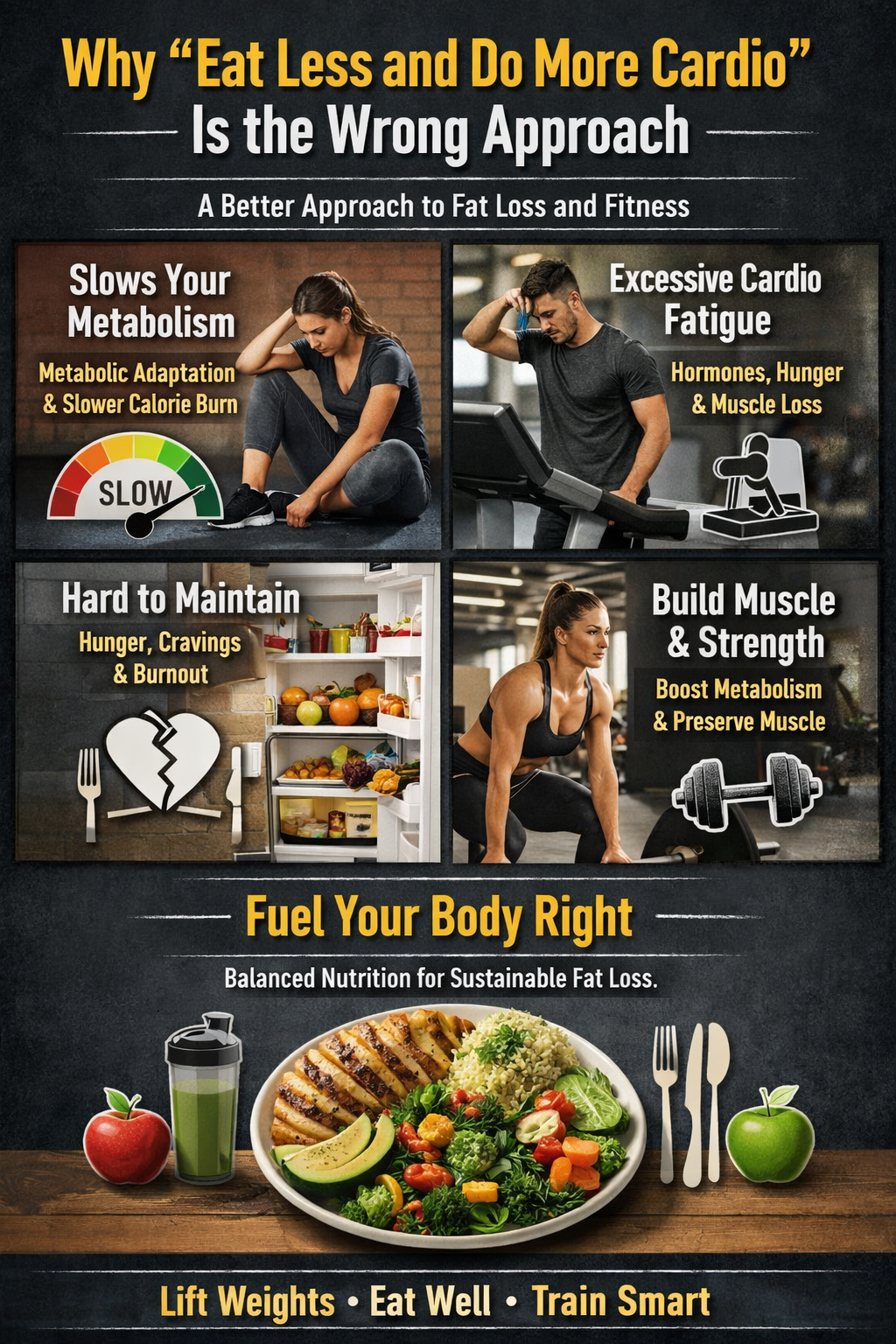
1. It Slows Your Metabolism Over Time
When you drastically cut calories, your body does what it is designed to do: survive.
It adapts by:
- Lowering your resting metabolic rate
- Conserving energy
- Making you more efficient at burning fewer calories
This means the longer you under-eat, the fewer calories your body needs. Progress stalls, and the only way forward feels like eating even less or doing even more cardio.
That is not sustainable.
2. Excessive Cardio Can Increase Fatigue, Not Fat Loss
Cardio has benefits, but relying on it as your main fat-loss tool can cause problems:
- Elevated stress hormones
- Increased hunger
- Poor recovery
- Loss of muscle mass
When muscle is lost, metabolism drops even further. You may see the scale move at first, but what you are losing is often muscle and water, not body fat.
3. Eating Too Little Makes Consistency Hard
Extreme restriction often leads to:
- Constant hunger
- Low energy
- Irritability
- Cravings and binge cycles
This is why many people feel “on track” Monday through Thursday and completely fall apart by the weekend. It is not a lack of discipline. It is your body asking for fuel.
Consistency beats intensity every time.
4. Muscle Is the Key to Long-Term Fat Loss
Muscle is metabolically active tissue. The more muscle you have, the more calories you burn at rest.
Strength training:
- Preserves and builds lean muscle
- Improves body composition
- Increases metabolism
- Creates a firmer, stronger physique
You can lose weight without strength training, but you will not like how your body looks or feels long term.
5. Fueling Your Body Improves Results
Eating enough of the right foods supports:
- Hormone balance
- Recovery
- Performance
- Sustainable fat loss
A balanced approach that prioritizes protein, vegetables, healthy fats, and adequate carbohydrates allows your body to work with you, not against you.
Fat loss should feel challenging, not miserable.
The Better Approach
Instead of eating less and doing more cardio, focus on:
- Strength training multiple times per week
- Moderate, intentional conditioning
- Eating enough to support training and recovery
- Building habits you can maintain year-round
Fat loss is not about punishment. It is about building a stronger, healthier body that burns fuel efficiently.
Final Thoughts
If your plan relies on constant hunger and hours of cardio, it is not a plan you can sustain. The goal is not to see how little you can eat or how much you can suffer.
The goal is to build a body that is strong, resilient, fueled, and capable for life.
Eat smarter. Train with purpose. Play the long game.
 KW CrossFit
Leave a comment