Why Doing Hard Things Is the Fastest Way to Feel Capable Again
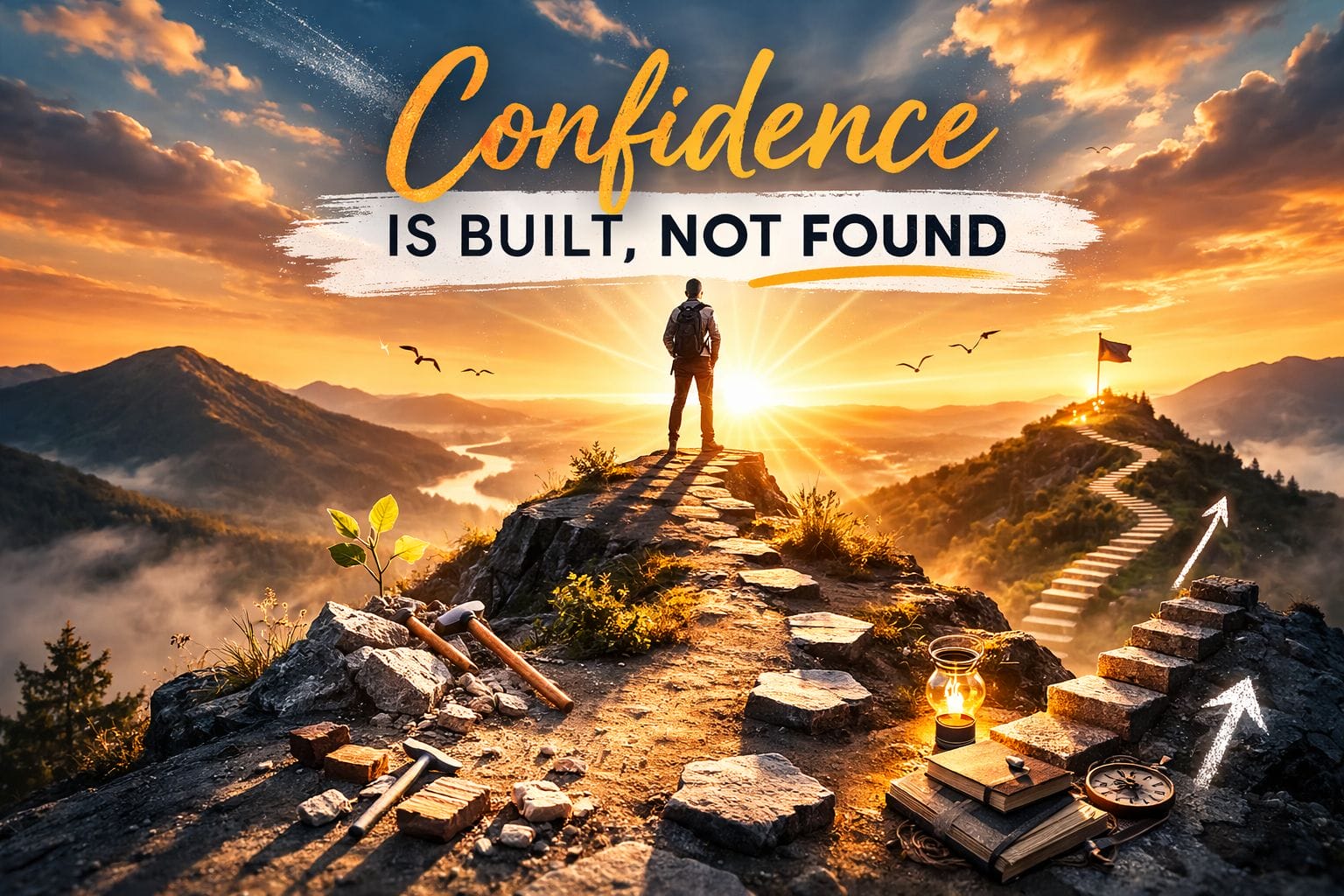
Most people think confidence is something you feel before you act.
They believe that once they feel more motivated, more sure of themselves, or more “ready,” then they’ll finally take action.
But that’s not how confidence actually works.
Confidence doesn’t come first.
Action does.
And more specifically, confidence is built through competence — the experience of doing something hard, sticking with it, and getting better over time.
This post breaks down why waiting for confidence keeps people stuck, how competence actually creates belief, and how you can start rebuilding confidence in a practical, repeatable way.
The Big Myth: Confidence Comes Before Action
We’re taught — subtly and constantly — that confident people act boldly because they believe in themselves.
In reality, most confident people didn’t start that way.
They earned confidence by proving to themselves they could handle discomfort, effort, and challenge.
Here’s what usually happens instead:
- You want to start something new
- You don’t feel confident yet
- You wait until you “feel ready”
- Nothing changes
- You assume the problem is you
The issue isn’t a lack of confidence.
It’s a lack of evidence.
Your brain doesn’t build belief from positive thinking.
It builds belief from experience.
Why Overthinking Kills Confidence
One of the biggest confidence killers isn’t failure — it’s overthinking.
When you overthink:
- You analyze instead of act
- You imagine outcomes instead of testing them
- You protect comfort instead of building capability
Over time, this creates a pattern:
- You avoid hard things
- You don’t collect wins
- You stop trusting yourself
Confidence fades not because you’re incapable — but because you’ve stopped giving yourself opportunities to prove otherwise.
Confidence needs proof.
And proof only comes from action.
Avoiding Hard Things Feels Safe — But It Costs You
Avoidance feels good in the short term.
You stay comfortable.
You avoid embarrassment.
You don’t risk failing.
But there’s a long-term cost most people don’t notice right away.
Every time you avoid something challenging:
- You reinforce the idea that it’s “too much”
- You shrink your comfort zone
- You quietly lose trust in yourself
On the flip side, doing something hard — even imperfectly — sends a powerful message:
“I can handle this.”
That message compounds.
Not because the task was easy — but because you showed up anyway.
The Confidence Loop: How Competence Is Built
Confidence isn’t random.
It follows a predictable loop.
Here’s a simple framework:
Action → Struggle → Adapt → Improve → Confidence
Let’s break it down.
1. Action
You do something slightly uncomfortable.
Not extreme. Just challenging enough to matter.
2. Struggle
It doesn’t feel smooth.
You feel awkward, tired, unsure.
This is normal — and necessary.
3. Adapt
You learn.
You adjust.
You get feedback (from experience, not opinions).
4. Improve
Small improvements show up.
You last longer.
You understand more.
You move better.
5. Confidence
Your brain recognizes progress.
Belief grows because it’s earned.
Skip any step — especially struggle — and confidence never sticks.
Why Physical Training Is Such a Powerful Confidence Builder
This is one reason structured training is so effective beyond just fitness.
It forces the confidence loop to happen.
- You show up when it’s inconvenient
- You do hard things on purpose
- You see measurable improvement
- You build trust in yourself
That confidence doesn’t stay in the gym.
It carries into:
- Work decisions
- Personal boundaries
- Stress tolerance
- Self-respect
When your body learns, “I can handle this,” your mind follows.
The Problem With Motivation-Based Confidence
Motivation feels good — but it’s unreliable.
If confidence depends on motivation:
- You feel strong one day
- Lost the next
- Stuck when life gets busy
Competence-based confidence is different.
It’s quieter.
More stable.
Less emotional.
It sounds like:
- “I’ve done this before.”
- “I know how to handle hard days.”
- “I don’t need to feel ready to start.”
That kind of confidence doesn’t disappear when life gets stressful — because it was built inside stress.
What Most People Get Wrong About “Being Confident”
Confidence isn’t:
- Loud
- Perfect
- Fearless
Real confidence is:
- Showing up without guarantees
- Trusting your ability to figure things out
- Knowing discomfort doesn’t mean danger
Confident people aren’t immune to doubt.
They’re just practiced at moving forward anyway.
A Practical Way to Start Building Confidence This Week
You don’t need a massive life overhaul.
You need one small, repeatable challenge.
Here’s a simple approach:
- Choose one action that feels slightly uncomfortable but doable
- Commit to doing it consistently, not perfectly
- Track effort — not outcomes
Examples:
- Commit to three workouts per week
- Walk for 10 minutes daily without excuses
- Learn one new movement or skill
- Show up even when energy is low
The goal isn’t intensity.
The goal is proof.
Every time you follow through, you deposit evidence into your confidence bank.
The Real Takeaway
Confidence isn’t a mindset trick.
It’s a result.
You don’t think your way into belief.
You act your way into it.
Do hard things.
Do them imperfectly.
Do them consistently.
Confidence will follow — not because you hoped for it, but because you earned it.
Start small. Start now. And let competence do the work.
We genuinely love helping people feel their best and stay healthy. Whenever you’re ready, we’d love to chat.


