
For decades, we were taught to build our diets around bread, pasta, cereal, and grains. Fat was the enemy. Calories were king. And somehow, we were told this was the foundation of good health.
Fast forward to today and we’re seeing the results: rising obesity, metabolic disease, low energy, and confusion around food.
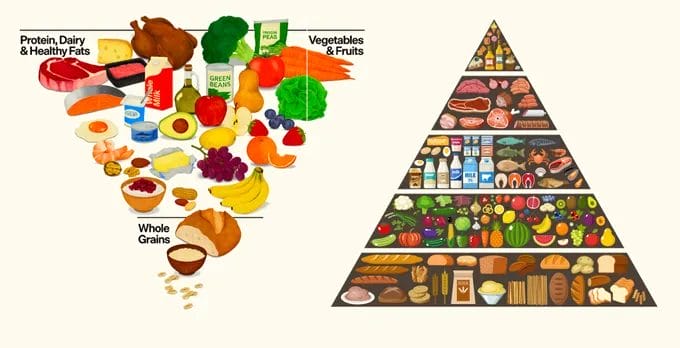
It’s time for a new food pyramid. One that actually supports health, performance, and long-term sustainability.
Why the Old Food Pyramid Failed
The traditional food pyramid was built on a few flawed assumptions:
- Calories matter more than food quality
- Fat should be avoided
- Carbohydrates should make up the majority of daily intake
- Highly processed foods can be “healthy” if they fit the pyramid
What we’ve learned since then is simple: the body doesn’t respond the same way to all calories, and food quality matters more than food quantity.
The New Food Pyramid (Built From the Ground Up)
1. Protein Is the Foundation
Protein now sits at the base of the pyramid, where it belongs.
Why?
- Supports muscle, metabolism, and recovery
- Helps regulate blood sugar
- Keeps you full and satisfied
- Essential for strength, longevity, and body composition
Think meat, eggs, fish, and high-quality protein sources first at every meal.
2. Vegetables for Volume and Micronutrients
Next comes vegetables.
Vegetables provide:
- Fiber for digestion
- Vitamins and minerals
- Antioxidants
- High volume with low calorie density
They support gut health and overall wellness without spiking blood sugar.
3. Healthy Fats for Hormones and Energy
Fats are no longer the villain.
Healthy fats help:
- Balance hormones
- Support brain health
- Improve satiety
- Provide long-lasting energy
Examples include olive oil, avocado, nuts, seeds, butter, and animal fats from quality sources.
4. Fruit and Carbohydrates as Tools, Not Staples
Carbohydrates move higher up the pyramid.
That doesn’t mean they’re bad. It means they’re optional and intentional.
Fruit and starches work best when:
- You’re training hard
- You’re active and metabolically healthy
- You use them to fuel performance, not replace meals
This removes the “one-size-fits-all” approach.
5. Processed Foods at the Very Top
Ultra-processed foods sit at the tip of the pyramid, where they belong.
These foods:
- Add little nutritional value
- Are easy to overconsume
- Disrupt hunger signals
They aren’t forbidden, but they are no longer the foundation of daily nutrition.
What This Means in Real Life
The new food pyramid isn’t about perfection. It’s about priorities.
If you:
- Build meals around protein
- Add vegetables for nutrients
- Include healthy fats for balance
- Use carbs strategically
- Limit processed foods
You’ll naturally eat better without tracking, restricting, or stressing.
Simple > Perfect
Nutrition doesn’t need to be complicated. It just needs to make sense.
The new food pyramid shifts the focus from:
- Calories to quality
- Restriction to nourishment
- Trends to sustainable habits
And most importantly, it supports real people with real lives who want more energy, better performance, and long-term health.
If you want help applying this in a way that fits your lifestyle, training, and goals, that’s exactly what we do every day at KW CrossFit. 💪🥩🥦
